


ILS Managers See Minimal Losses From Japan Quake
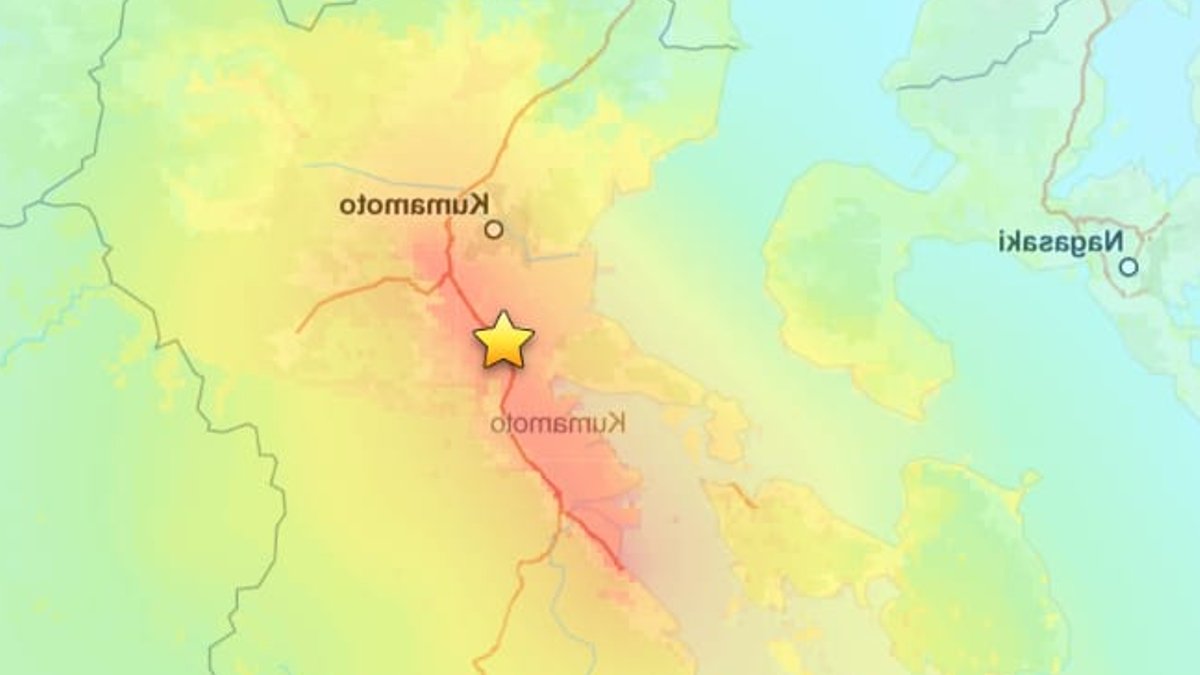
A magnitude 6.8 earthquake struck Japan’s Kumamoto prefecture this week, resulting in significant local damage but likely leaving the broader insurance-linked securities (ILS) market largely unscathed. Specialist investment managers are analyzing the event, with early assessments suggesting the catastrophe bond and ILS sector will not face a major financial hit.
Japanese authorities have confirmed 13 deaths following the tremor. Rescue operations are ongoing at a collapsed Aeon shopping mall where four people remain missing, as well as at a Nippon Paper factory in Yatsushiro. Several industrial factories and chip manufacturers in the region have paused operations to assess structural integrity. The relatively shallow depth of the earthquake means its impacts are set to be relatively meaningful for an earthquake of this magnitude.
As time passed and reporting became available, it became clearer that while not catastrophic on a historical scale, the damage to properties and infrastructure is widespread. Insurance claims will follow, adding to the industry toll.
Industry Loss Estimates
Euler ILS Partners, a Zurich-based investment manager, produced an event report estimating the insured industry loss could fall between $3 billion and $4.5 billion. The firm stated that at this level of impact, it does not expect any direct hit to the positions held by its fund.
Related: Tokenized reinsurance lowers barriers expands market access
“At this stage, we do not expect any direct impact on the positions held within the fund,” Euler ILS Partners stated. “Nevertheless, the event remains relevant for certain aggregate reinsurance structures, where losses from this event may contribute to the erosion of aggregate retentions or deductibles.”
The investment manager highlighted that the 2016 Kumamoto earthquake sequence, which culminated in an M7.0 event, generated insured losses estimated at between $3.9 billion and $5.5 billion. This week’s losses are tracking slightly below that historical benchmark. The firm noted that total economic losses are expected to be materially higher than insured losses.
For investors in catastrophe bonds and similar instruments, this specific event highlights the resilience of structures designed to absorb only the most extreme tail risks. While the human cost and physical destruction in Kumamoto are undeniable, the financial engineering behind these securities appears to be functioning as intended, shielding capital from mid-sized disasters that fall below the trigger thresholds of major market-wide losses.
Cat Bond Market Exposure
Icosa Investments AG noted that roughly $2 billion of cat bond insured limit is exposed solely to Japanese earthquake, with further exposure held in multi-peril deals. However, the manager emphasized that these structures are generally calibrated to more intense events than this week’s tremor.
“Initial assessments points to a low likelihood of significant market impact,” Icosa Investments reported. “The main caveat is that indemnity triggers leave some residual uncertainty until ground-truth damage data emerges.”
Isacco Loconte, an ILS Investment Specialist at asset manager Azimut Switzerland SA, provided a granular analysis of the potential market loss. He noted that the quake carries severe destructive potential due to its shallow depth of just 10km. His team tracks 14 positions at risk, representing approximately $2 billion in exposed principal.
By analyzing the AIR Stochastic Catalog for simulated events within Kumamoto Prefecture with a magnitude of Mw 6.8, the firm filtered 5,135 modeled events. The data showed that in 82% of these scenarios, the resulting loss to the Cat Bond market is $50 million or less. Given that the total outstanding Cat Bond market currently exceeds $50 billion, a $50 million impact is effectively negligible from a broader market capitalization perspective.
A secondary filtering of the events by distance and depth isolated a subset of 13 events, none of which generated losses for Cat Bond investors. While the catastrophe bond market exposure seems expected to be zero to very minimal, there are aggregate structures that may be impacted by retention erosion.
Kentaro Tada, CEO of Howden Re Japan, commented that it is too early for formal estimates. He expects insured losses to remain well below the 2016 Kumamoto earthquake and closer to the 2024 Noto earthquake, unless the aftershock sequence reveals more extensive damage.

Tokenized reinsurance lowers barriers expands market access


